

News
Walk-In Shower Features That Actually Matter for Aging Parents (and What Is Just Marketing)

Walk-In Shower Features That Actually Matter for Aging Parents (and What Is Just Marketing)
Scenario: after a parent falls, you start researching walk-in showers and run into a wall of feature lists: seats, grab bars, handheld sprayers, textured floors, glass guards. Half of them feel useful, half feel like upsells. Which ones make a real difference?
After two decades of supplying seating and bar hardware to care homes and bathroom brands, here is the honest breakdown, in order of importance.
1. The threshold: the single most important number
The most dangerous moment in any shower is getting in and out. A traditional tub wall is roughly 15 inches high; a standard shower curb is 3 to 4 inches. For an unsteady parent, that curb is the trip hazard.
- Best: a truly curbless (zero-threshold) entry, where the floor slopes gently to the drain.
- Acceptable: a low curb of under 2 inches with a contrasting color edge so it is visible.
- Marketing trap: a “walk-in” label on a enclosure that still has a 4-inch curb and a 6-inch step.
When you get quotes, ask one question: “What is the finished height at the entry?” Everything else is secondary.
2. Grab bars: quantity and placement beat style
Grab bars are the feature most often value-engineered out, and the one with the best evidence behind it. The specification that matters:
- Three zones: one at the entry to hold while stepping over the curb, one beside the water controls, one on the wall next to the seat to push up from.
- Height: 33 to 36 inches above the floor (ADA guidance).
- Anchoring: screwed into wall blocking or studs. A bar that flexes in drywall is decoration.
- Diameter: 1¼ to 1½ inches, which is what most hands can grip securely.
A 45-degree angled bar beside the seat is more versatile than a single horizontal one, because it works for both sitting down and standing up. See a typical specification in the bathroom grab bars range. And skip the suction-cup versions entirely; they fail exactly when needed.
3. A seat the person will actually use
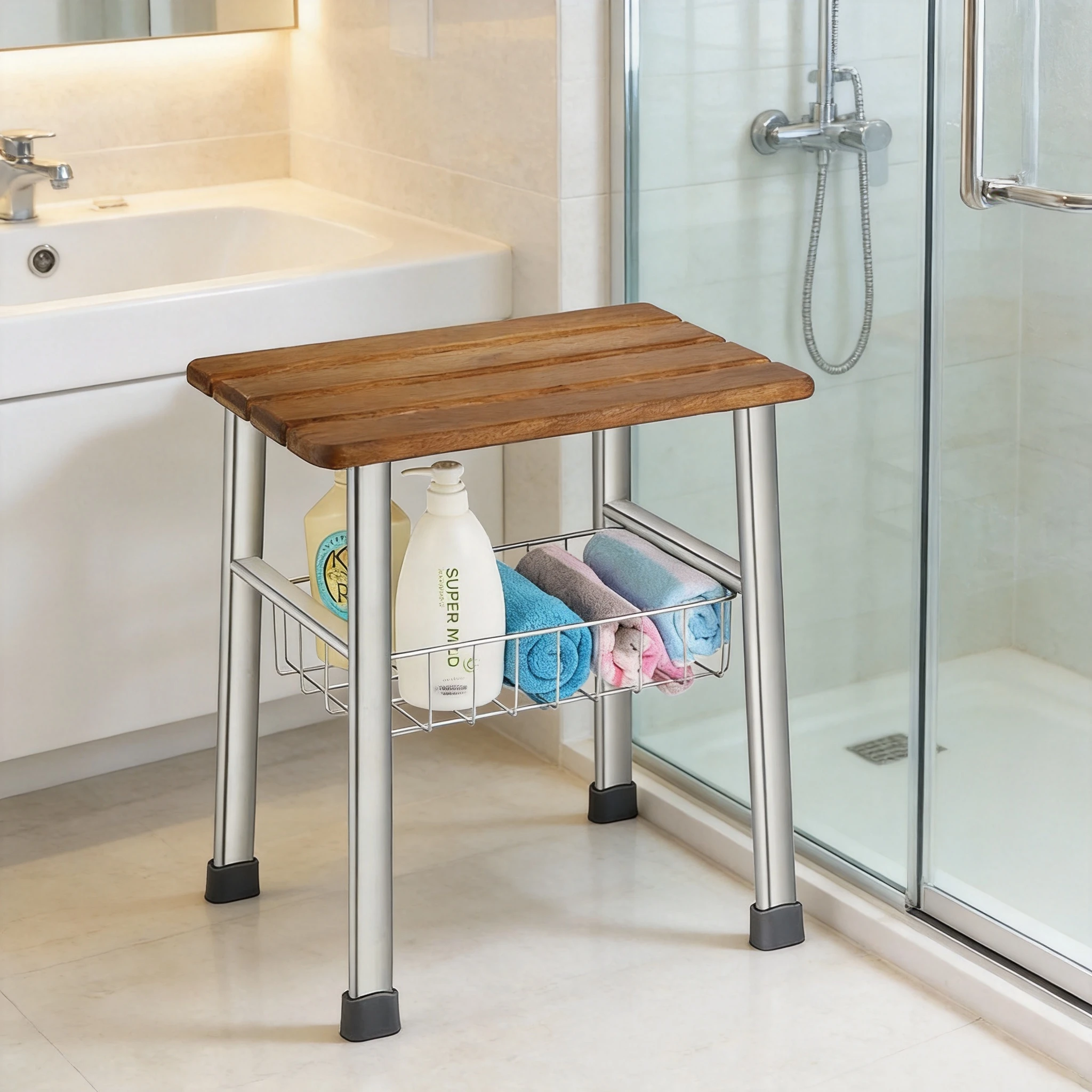
This is where walk-in shower showrooms mislead people. A beautiful tiled corner bench often fails in practice: it is usually too high or too deep, it is cold, it eats floor space in a small shower, and water pools on it.
What works better:
- Seat height 17-19 inches (43-48 cm), so feet reach the floor. Measure this against the parent’s lower-leg length, not the brochure.
- Depth around 16 inches, with a backrest or a wall to lean against.
- In showers under about 36 x 36 inches, a wall-mounted folding seat is the better choice: full strength when seated, folded flat out of the way for other family members. The HD-02 folding shower seat is a typical example of the care-home specification. Compare the full range of wall mounted shower seats before paying mason to build a bench.
- Weight rating of 250 kg / 550 lbs class hardware is standard for care settings and removes any doubt.
4. Handheld showerhead on a slide bar
Inexpensive, and it converts a shower from “standing ordeal” to “seated routine”. The slide bar lets the spray height adjust between a standing user and a seated one, which matters when two generations share the bathroom. Fixed rain heads only are a showroom luxury, not a care feature.
5. Slip-resistant flooring
Textured porcelain or small-format mosaic tile (more grout lines means more grip) is what actually prevents falls. Glossy large-format tile, polished stone, and smooth acrylic pans are the common regrets. A floor that passes the “wet sock test” with visible texture is what you want.
6. Lighting and anti-scald, the quiet ones
Two features nobody photographs but every occupational therapist mentions:
- Good light inside the shower, plus a night light on the path from bedroom to bathroom. Falls happen in dim light on the way, before the shower is even reached.
- A thermostatic mixing valve that caps water temperature and compensates for pressure changes, so a flushed toilet cannot scald a seated parent.
What is mostly marketing
- Multiple body sprays: more walls to hit, more valves to maintain, no safety value.
- Rain showerheads as the primary head: pleasant, but useless for rinsing hair while seated. Fine as a second head.
- Steam generators: a spa feature, and a scald and slip risk in a care context.
- “Anti-slip” spray-on coatings: wear off within months; specify textured material instead.
- Heated floors: genuinely nice, zero fall prevention. Budget them last.
- “Senior-friendly” bundled kits: check the seat height and bar anchoring individually; bundles often include the cheapest versions of each.
The 60-second checklist before you sign
- Entry threshold: what finished height? (Under 2 inches, ideally zero.)
- How many grab bars, at what heights, and what are they anchored to?
- Seat: what height, what depth, what weight rating, and does it fold away?
- Is the showerhead handheld and on a slide bar?
- Floor: what texture, what tile format?
- Is there an anti-scald valve in the quote?
If a contractor answers all six without hesitation, you have found a good one. If you are sourcing the hardware yourself, seats and bars from a specialist manufacturer cost little more than generic versions and are the parts that carry the person’s weight. LEMAS has manufactured folding wall-mounted shower seats and grab bars since 1992; for project or wholesale pricing, contact the factory here.